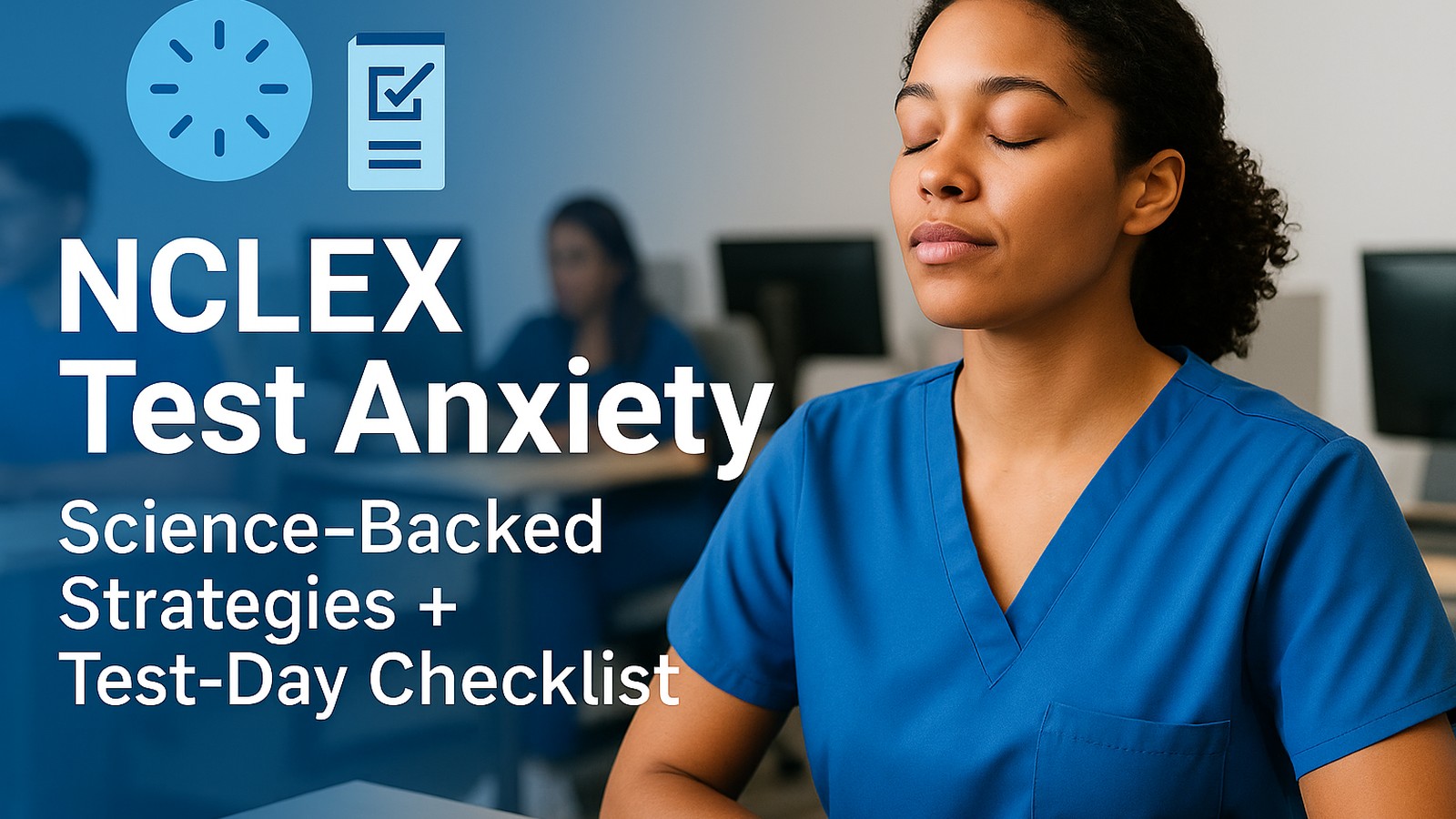
Feeling NCLEX test anxiety is common—and manageable. Use the evidence-based steps below to calm your nervous system, think clearly, and perform like you practiced. Pair the routines here with focused question practice and short, consistent study blocks for the best results.
What Causes NCLEX Test Anxiety—and What Actually Helps
Why it spikes:
-
High stakes (licensure, first job)
-
Uncertainty (adaptive format, variable length)
-
Cognitive overload (new NGN item types)
What works:
-
Brief breathing techniques that shift you into parasympathetic “calm.”
-
Task planning (1-page checklist) to reduce decision fatigue.
-
CAT-style practice so difficulty changes feel normal, not alarming.
12 Tips to Calm Anxiety Before the NCLEX
-
Shrink the window. Study in 25–40 minute blocks, then 5–10 minute breaks.
-
Front-load safety. Review pharm, isolation precautions, delegation, and prioritization daily.
-
Daily 25. Do one timed 25-question set with rationales; track 1–2 weak topics.
-
Sim the format. Use CAT/NGN simulators twice weekly so difficulty swings don’t rattle you.
-
Pre-sleep routine (60–90 minutes). Light review → no screens → lights out. Sleep cements recall.
-
Practice your reset. 2 minutes of controlled breathing before each study/practice block (see below).
-
Power cues. Replace “I have to pass” with “One question at a time.”
-
Pack the night before. ID, ATT, route, layers, snack/water for breaks.
-
Game-day breakfast. Protein + complex carbs; hydrate early.
-
Micro-wins. After any tough item, exhale, shoulder drop, “new question, new chance.”
-
Rationales > score. Anxiety drops when you understand why answers are right.
-
Limit the scroll. Stop forum-doom the week of the exam.
Breathing Techniques to Stay Calm During NCLEX
Use whichever feels best and memorize the counts.
-
4-in / 6-out: Nose inhale 4 counts → nose/mouth exhale 6 counts, 8–12 cycles (fast parasympathetic shift).
-
Box breathing 4-4-4-4: Inhale 4 → hold 4 → exhale 4 → hold 4, 4–6 cycles (steadies pace).
-
Physiologic sigh (x3): Inhale → quick top-up inhale → long slow exhale; repeat 3–5 times (releases tension quickly).
Tip: Start one of these before your tutorial ends, then repeat anytime your heart rate jumps.
NCLEX Test Day Checklist (Print This)
Bring
-
Government-issued ID (name matches ATT) + ATT
-
Comfortable layers, eyeglasses/contacts
-
Water + simple snack for breaks
Plan
-
Route + buffer (arrive 30 minutes early)
-
2 alarms the night before
Do
-
2 minutes of 4-in/6-out breathing before first item
-
Read stem first; scan for priority, initial, best
-
Eliminate unsafe/irrelevant choices, then choose the safest action
-
Breaks: hydrate, walk 1 minute, one breathing round
-
Move on from sticky items (the CAT expects some misses)
Avoid
-
New resources or cramming the morning of
-
Caffeine overload
-
Post-exam score-guessing spirals
Does the NCLEX Get Harder as You Go? (CAT Basics)
The exam uses computer adaptive testing (CAT) to estimate your ability. Questions may feel harder or easier over time; that’s normal. Passing depends on the level you answer consistently, not how many you “get right.” Treat each item as a fresh decision and keep your pace steady.
Practice Smarter with Nurseclex
-
Timed NCLEX practice questions with rationales build calm and accuracy.
-
CAT/NGN simulator normalizes the testing environment and item types.
-
Targeted study plans (2/4/6-week) maintain momentum without burnout.
Related reading on Nurseclex :
-
NCLEX Study Plan: 7 Proven Strategies + 2/4/6-Week Schedules
-
Pharmacology Made Easy — The Ultimate Guide for Nursing Students
Quick FAQ: NCLEX Test Anxiety
How can I calm anxiety the week before the NCLEX?
Run a 25-question timed set daily with rationales, do a light content refresh of safety topics, and protect sleep. Finish studying 60–90 minutes before bed.
How do I stay calm during the exam?
Start with 2 minutes of 4-in/6-out breathing; repeat anytime you feel a spike. Read the stem first, strip out unsafe options, choose the safest action, and move on.
What should I do the day before?
Light review only, pack your bag, confirm your route, and sleep 7–9 hours. No new resources.
Does a shorter or longer test mean pass or fail?
No. Length varies with CAT. Focus on one question at a time and maintaining your decision process.
Final Takeaway
You don’t need to eliminate nerves—you just need repeatable routines that keep them from steering your decisions. Pair short breathing resets with targeted practice and a simple test-day plan. You’ve done the work; now execute calmly.
Related blogs

Recent posts