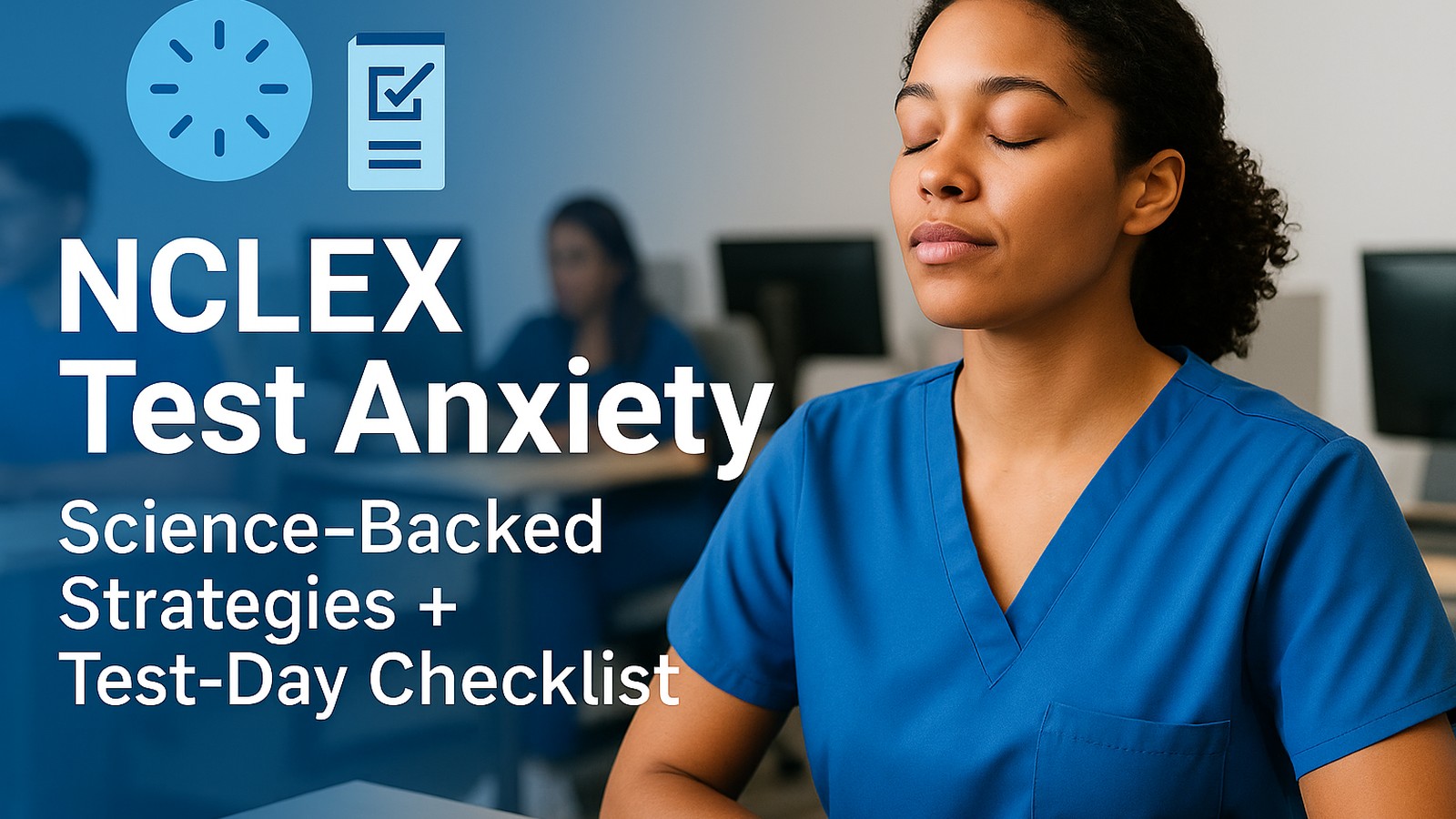
NCLEX test anxiety affects a huge percentage of nursing students—regardless of how well they’ve prepared. Even candidates who score high on practice tests can suddenly feel overwhelmed, shaky, forgetful, or mentally blocked once the pressure sets in.
The good news? NCLEX test anxiety is not a sign of poor preparation. It is a biological stress response, and once you understand how it works, you can control it.
This comprehensive guide explains:
-
Why NCLEX test anxiety happens
-
How it affects your brain and performance
-
Evidence-based techniques that improve focus
-
A step-by-step test-day routine to keep you calm
-
Internal links to helpful NCLEX study guides on NurseClex
Let’s break it all down.
Understanding NCLEX Test Anxiety (What’s Really Happening in Your Brain)
1. Your brain misinterprets the NCLEX as a “threat”
During high-pressure moments, your nervous system activates the fight-or-flight response. This releases stress hormones that are helpful for survival—but harmful for test performance.
2. Cortisol temporarily blocks memory retrieval
When cortisol spikes, it becomes harder to recall information you already know.
This creates the feeling of:
-
“I’ve studied this—I just can’t remember it.”
-
“My mind is blank.”
These are classic symptoms of NCLEX test anxiety, not lack of preparation.
3. Overthinking increases cognitive load
Under stress, your brain processes too much information at once. This results in:
-
Second-guessing your answers
-
Overanalyzing simple questions
-
Changing correct answers to wrong ones
Recognizing these patterns is the first step in taking control.
Proven, Science-Backed Ways to Reduce NCLEX Test Anxiety
1. Strengthen Your Confidence With Real NCLEX-Style Practice
Exposure reduces fear. The more realistic the practice, the less threatening the real exam feels.
Use high-quality question banks that reflect the complexity of the exam. You can explore related practice content on NurseClex such as:
When you repeatedly practice realistic questions, your brain becomes desensitized to the pressure.
2. Use Evidence-Based Breathing Techniques to Lower Cortisol
Breathing regulates your autonomic nervous system and reduces anxiety within minutes.
Try the 4-7-8 method:
-
Inhale for 4 seconds
-
Hold for 7 seconds
-
Exhale slowly for 8 seconds
Research shows this method lowers heart rate and improves clarity—crucial for preventing NCLEX test anxiety during the exam.
3. Build Long-Term Memory With Active Recall
Passive studying (reading, highlighting, re-writing notes) increases stress because it doesn’t guarantee memory retention. Active recall ensures you truly understand the content.
Use:
-
Flashcards
-
Question banks
-
Teaching concepts aloud
-
Mini quizzes
This is especially useful for content-heavy areas such as:
The stronger your memory, the less NCLEX test anxiety you’ll experience.
4. Simulate the Real NCLEX Environment
Your brain performs best when conditions feel familiar.
Do at least 3 full practice exams under exam-like conditions:
-
Timed
-
No phone
-
Quiet space
-
Minimal breaks
This method conditions your mind to stay calm and focused under pressure, making the real exam feel like "just another practice session."
5. Strengthen Weak Areas Instead of Re-Studying Everything
Most NCLEX test anxiety comes from feeling unsure about certain topics.
Identify your weakest categories using practice results and focus on improving them.
Useful guides include:
Targeted improvement builds certainty—and certainty destroys anxiety.
A Test-Day Routine That Keeps NCLEX Test Anxiety Low
✔ The Night Before:
-
Avoid heavy studying
-
Sleep at least 7 hours
-
Prepare your documents and clothes
-
Eat a balanced meal (protein + complex carbs)
✔ The Morning Of:
-
Light breakfast
-
2–3 minutes of deep breathing
-
Skim motivational affirmations
✔ At the Testing Center:
-
Arrive 30 minutes early
-
Breathe before starting
-
Read each question slowly
-
Don’t panic if you get hard questions
-
Take optional breaks if needed
✔ During the Exam:
-
Remember: hard questions indicate you’re performing well
-
Don’t rush
-
Don’t change answers unless you misread the question
Implementing a routine reduces surprises and keeps your stress levels stable.
Final Thoughts: You Can Control NCLEX Test Anxiety
NCLEX test anxiety doesn’t mean you aren’t prepared. It means your brain needs direction, confidence, and regulation. With the right techniques—breathing, active recall, simulated exams, and a clear test-day plan—you can stay focused, calm, and ready for anything the NCLEX throws at you.
Use NurseClex’s practice resources to strengthen confidence and reduce uncertainty. Every step you take toward preparation makes NCLEX test anxiety weaker and your mindset stronger.
You’ve worked hard to reach this point—now take control of the moment.
Related blogs
Recent posts